Sovereign AI deployment means keeping full control of models, data, infrastructure, and legal authority inside a jurisdiction you choose, a standard shaped by frameworks like the NIST AI RMF and the EU AI Act, and something we build at Forge AI Deployment. Organizations handling regulated, high-sensitivity, or mission-critical workloads should treat it as the default architecture, not an upgrade considered later.
TL;DR:
- Data residency only locates storage and processing; sovereignty also depends on who operates the system, which laws apply, and who controls encryption keys.
- Choose on premises, controlled cloud, edge, or air gapped deployment according to your threat model and staffing capacity, then fit models within that boundary.
- Under the EU AI Act, high risk deployers must monitor systems, manage input data, report incidents, and retain logs at least six months where applicable.
- Treat logging, provenance records, and incident histories as ongoing operational controls, because auditors examine evidence that launch diagrams alone cannot establish.
- Air gapped systems can receive updates through signed offline packages that undergo vulnerability review and documented approval before import, without opening a live network connection.
Table of Contents
- What sovereign AI means and how it differs from residency and localization
- Why sovereign AI matters for regulated and public-sector deployments
- Deployment patterns and architecture options for sovereign AI systems
- Mapping NIST AI RMF and EU AI Act obligations to sovereign deployments
- Technical and operational controls checklist before you approve production
- From policy to production: an operational sequence for sovereign AI
- What experienced sovereign AI teams get wrong first
- How Forge AI Deployment helps operationalize sovereign AI
- FAQ
- Sources
What sovereign AI means and how it differs from residency and localization
Sovereignty, residency, and localization get used interchangeably, but they answer different questions. Data residency specifies where data is stored or processed. Data localization is a legal requirement to keep certain categories of data inside a territory. Sovereignty goes further: it requires control over who operates the system, which laws govern it, and who can access it under compulsion, as explained in this comparison of sovereignty and residency.
A regional cloud zone can satisfy residency on paper while leaving sovereignty exposed. If a foreign-headquartered provider operates the region, administrators in another country can still have access paths, support tickets can route across borders, and a foreign court order can compel data disclosure regardless of where the servers sit.
To evaluate a deployment honestly, check these control dimensions:
- Who legally owns and operates the infrastructure, and under which corporate structure.
- Which country’s laws govern the contract, the provider, and any compelled-access requests.
- Where administrators, support staff, and subcontractors are physically located.
- Who holds encryption keys, and whether the provider can access them unilaterally.
- Which sub-processors and telemetry pipelines touch the data, and where they send it.
A deployment that fails any of these checks is not sovereign, even if every byte sits in-country. Sovereignty has to be demonstrated through architecture and operating discipline, not asserted as a marketing claim.
Why sovereign AI matters for regulated and public-sector deployments
Regulated organizations adopt sovereign architectures for reasons that go beyond compliance checkboxes. The EU AI Act, for instance, places direct obligations on deployers of high-risk systems, including monitoring, input-data management, and incident reporting, under Article 26. Meeting those obligations is far simpler when you control the full stack rather than depending on a vendor’s external systems to produce evidence on request.
Beyond regulatory mapping, sovereign designs reduce several categories of operational risk:
- Dependency risk: a vendor outage, policy change, or market exit no longer stalls your mission-critical workload.
- Compelled-access risk: foreign legal demands cannot reach data that never leaves your controlled perimeter.
- Intellectual property risk: proprietary models, prompts, and training data stay inside infrastructure you govern.
Deployer obligations under the EU AI Act apply directly to how a high-risk system is run in production, covering monitoring, log retention, and incident reporting, according to Article 26. That single requirement reshapes operational planning: logging and evidence collection stop being an afterthought and become part of the architecture from day one.
There are also practical operational gains. Keeping inference close to where data is generated reduces latency, local infrastructure avoids dependence on external network availability, and governance structures align naturally with mission requirements instead of being retrofitted onto a public cloud contract.
Deployment patterns and architecture options for sovereign AI systems
Choosing a deployment boundary is the most consequential decision in a sovereign AI project, because it fixes your control level, staffing burden, and recovery responsibilities for the life of the system. Five patterns cover most real deployments:
- On-premises or private cloud: infrastructure your organization physically owns and operates, offering maximum control at the cost of full staffing and maintenance responsibility.
- Controlled cloud: a cloud environment contractually restricted to in-jurisdiction operators, administrators, and sub-processors, trading some control for elasticity.
- Distributed cloud: workloads spread across multiple controlled regions or providers to balance availability against a tighter sovereignty boundary.
- Edge deployment: inference running on local devices or site servers, useful where latency or intermittent connectivity rules out centralized infrastructure.
- Air-gapped deployment: a fully isolated network with no live external connection, reserved for the most sensitive workloads.
Each pattern trades control for operational burden differently. On-prem and air-gapped systems give you the tightest sovereignty boundary but require your team to own capacity planning, patching, and disaster recovery outright. Controlled and distributed cloud options preserve elasticity and reduce staffing load, but demand contractual and technical verification that the provider cannot bypass your boundary, a theme covered in this breakdown of sovereign deployment trade-offs.
Whichever pattern you choose, build these architecture components in from the start: network isolation between the AI environment and general corporate traffic, a VPC-native design that treats the sovereign boundary as a first-class network segment, physical site controls for any on-prem or edge hardware, and signed artifacts for every model and software package that enters the environment. A sovereign reference architecture from the ACM frames these as architectural quality attributes rather than policy add-ons, meaning identity, provenance, and auditability need to be explicit design elements, not documentation written after the system ships.
Pro Tip: Pick the deployment boundary based on your threat model and staffing capacity first, then select models and tooling that fit inside it, never the reverse.
Mapping NIST AI RMF and EU AI Act obligations to sovereign deployments
Standards and regulations give sovereign deployment teams a shared vocabulary for governance, but only when translated into operational tasks. The NIST AI RMF organizes risk management into four functions: GOVERN, MAP, MEASURE, and MANAGE. GOVERN is explicitly cross-cutting, meaning legal requirements, accountability structures, and risk tolerance set the terms for everything else. Without a named operating authority and an evidence owner, a sovereign deployment is only partially governed no matter how tight the network boundary is.
Mapping those functions onto a sovereign project looks like this:
- GOVERN: assign an accountable owner for risk decisions and evidence retention before any model goes live.
- MAP: document every use case, data source, and third-party dependency touching the system.
- MEASURE: define accuracy, groundedness, and security test criteria tied to the specific deployment.
- MANAGE: operate ongoing monitoring, incident response, and rollback procedures as standing processes, not one-time launch tasks.
The EU AI Act adds specific deployer duties for high-risk systems. Article 9 requires a continuous risk management system with testing obligations that persist across the system’s lifecycle, not a one-time assessment. Article 13 requires transparency and usable instructions so operators understand a system’s capabilities and limits. Article 26 requires monitoring, input-data management, log retention, and incident reporting to providers and authorities.
These are operational obligations, not paperwork exercises. Human oversight, monitoring dashboards, and retained logs have to exist as working systems before go-live. Jurisdiction-specific rules vary enough that legal and compliance teams should be involved at the architecture stage, not brought in to review a finished deployment. A practical NIST operationalization playbook walks through aligning these functions to deployment tasks in more detail.
Technical and operational controls checklist before you approve production
Before a sovereign AI system goes live, run it through a concrete acceptance checklist rather than relying on architecture diagrams alone. Sovereignty is an end-to-end control problem: the boundary has to cover prompts, source documents, embeddings, model weights, outputs, logs, telemetry, identities, encryption keys, update artifacts, support access, and backup paths. Missing any one of these leaves a gap an audit will eventually find.
- Inventory and classify every data source, model, and third-party dependency touching the system, tagging sensitivity levels.
- Verify egress controls: confirm no unauthorized network path allows data to leave the sovereign boundary, tested actively rather than assumed.
- Confirm encryption and key custody: decide whether keys are held internally or by an external party, and document who can access them.
- Validate provenance: require signed models, documented artifact lineage, and a vetting record for every third-party component, a practice detailed in this supply chain security guidance.
- Run acceptance tests: prompt-injection resistance, data-exfiltration attempts, accuracy and groundedness against representative queries, latency and capacity under realistic load, and rollback procedures that actually restore a prior working state.
- Establish logging and retention policy: capture model versions, retrieval sources, access decisions, approvals, evaluation results, incidents, and configuration changes.
A security architecture benchmark for regulated industries lays out a layered view of these controls that’s worth cross-checking against your own checklist before sign-off.
Evidence collection is the control most teams skip, and it’s the one regulators check first. Under Article 26 of the EU AI Act, deployers of high-risk systems must retain logs for at least six months where applicable, under the deployer’s own control rather than a vendor’s. Build that retention window into your logging architecture from the start, because retrofitting it after an incident is far harder than designing for it up front.
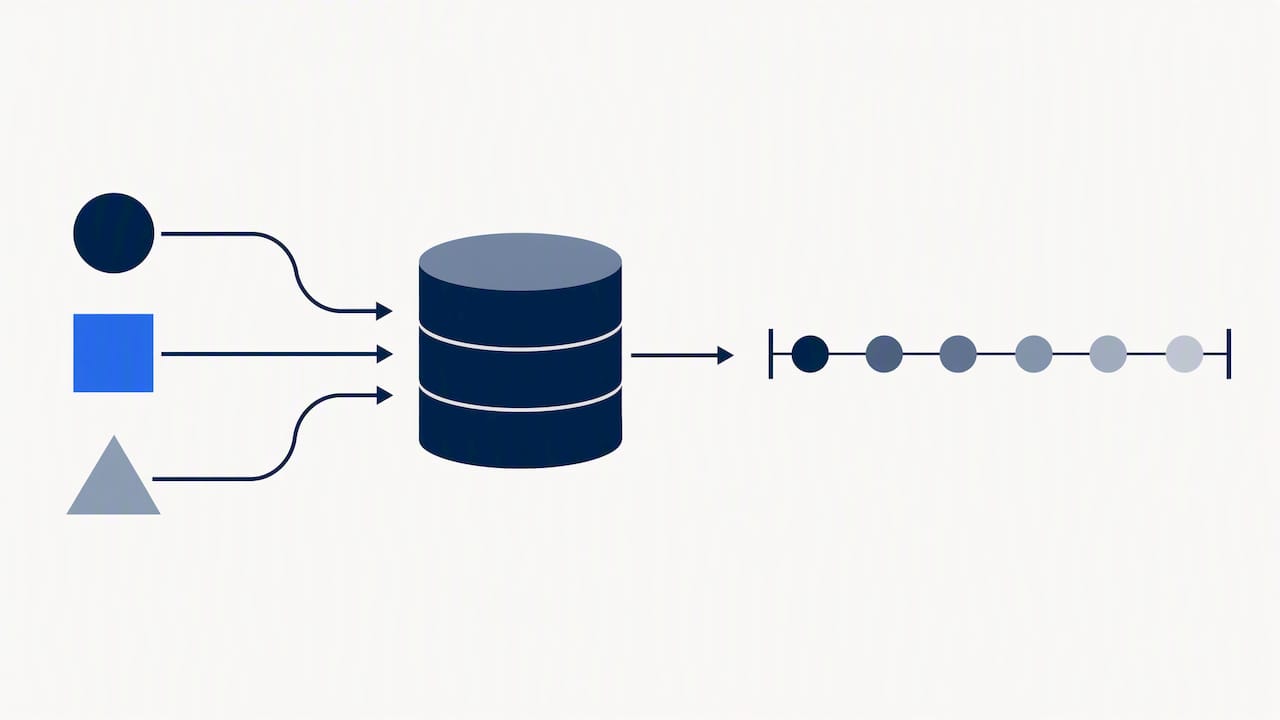
Acceptance testing should integrate with your continuous risk management process rather than run as a separate pre-launch gate. Article 9 frames risk management as ongoing, so the same tests you run before go-live need to repeat on a schedule afterward, with results feeding back into the GOVERN and MANAGE functions described earlier.
From policy to production: an operational sequence for sovereign AI
Turning a sovereignty policy into a running system follows a repeatable sequence. Skipping steps here is where most projects lose months later, correcting architecture decisions made without enough upfront analysis.
- Define the jurisdiction and threat model: decide which legal authority must govern the system and what adversaries or compelled-access scenarios you’re defending against.
- Inventory data and dependencies: catalog every data source, model, and third party that will touch the system.
- Choose the deployment boundary: on-prem, controlled cloud, distributed cloud, edge, or air-gapped, based on the patterns above.
- Select models and retrieval architecture: match model size and retrieval design to the boundary’s compute and connectivity constraints.
- Establish identity, encryption, and egress controls: lock down who can access the system and verify nothing leaves the boundary unapproved.
- Validate the supply chain: confirm signed artifacts and vetted provenance for every component before deployment.
- Run acceptance tests: the full checklist from the prior section, executed before any production traffic.
- Release with monitoring and rollback: go live with active logging, incident response, and a tested rollback path ready.
We deliver this sequence end to end: architecture design, air-gap procedures, and the underlying platform integration. As an official webAI systems integrator, we deploy webAI’s local-first platform into production, including webAI Personas tuned to specific operational roles, the Intelligence Delivery Network for distributing models and updates across sites, and webAI Frontline, which gives frontline teams fast, source-backed answers from large technical document libraries fully offline on a single device. In air-gapped environments specifically, we build controlled update import processes and local audit evidence export that support offline operation.
Pro Tip: Treat the update import process as a designed procedure with sign-off steps, not an ad-hoc file transfer, since that process is the first thing an auditor will ask to see.
What experienced sovereign AI teams get wrong first
Most sovereign AI projects over-invest in choosing the deployment boundary and under-invest in evidence collection. Logging, provenance records, and incident history are what regulators and auditors actually check, and they’re the first thing that breaks when a team treats sovereignty as a one-time launch milestone instead of continuous operations.
Experienced integrators earn their place by shortening the distance between a sound architecture and a system that passes its first audit. That means engaging legal, security, procurement, data governance, and operations teams at the design stage, not after the system is already running. A deployment that waits for legal review at launch time usually ends up rebuilt within a year.
— John Ezzell, Founder
How Forge AI Deployment helps operationalize sovereign AI
Standing up a sovereign AI system from scratch means solving architecture, supply chain, and operations problems at the same time, which is where we focus. We handle secure local and air-gapped deployment, custom model integration and optimization, private AI assistant rollout, sovereign MLOps and runtime orchestration, and ongoing performance tuning, all built on our partnership as an official webAI systems integrator, through which we deploy webAI Personas, the Intelligence Delivery Network, and webAI Frontline into environments where data never leaves your perimeter.
Our leadership brings extensive experience in high-consequence and complex environments, so the operational discipline behind your deployment is not improvised. If you’re mapping a sovereign AI project against the sequence above, we’re ready to walk through your architecture. Review our sovereign AI solutions or learn more about the webAI platform we deploy and operate for regulated and public-sector teams.
FAQ
What is the difference between data sovereignty and data residency?
Data residency specifies where data is physically stored or processed, while data sovereignty additionally requires control over who operates the system, which laws govern it, and who can access it under legal compulsion. A deployment can satisfy residency while still failing sovereignty if a foreign-headquartered provider retains administrative or key access, as explained in this residency versus sovereignty comparison.
When should an organization choose a sovereign AI deployment?
Sovereign deployment fits regulated, high-sensitivity, or mission-critical workloads where compelled data access, vendor dependency, or intellectual property exposure carries real consequences. Public-sector agencies and regulated enterprises in finance, defense, energy, and healthcare are the clearest fits.
What does the EU AI Act require from deployers of high-risk AI systems?
Deployers must monitor system operation, manage input data, retain logs for at least six months where applicable, maintain human oversight, and report incidents to providers and authorities, under Article 26. Article 9 adds a continuous risk management and testing obligation across the system’s lifecycle.
Can air-gapped AI systems still receive model updates?
Yes, through a controlled offline supply chain where signed model and software packages go through vulnerability review before being imported, rather than connecting the system to a live network. This procedures-based approach keeps the environment fully isolated while still allowing documented, auditable updates.
What architecture components support sovereign AI from the start?
Network isolation from general corporate traffic, a VPC-native design, physical site controls for on-prem or edge hardware, and signed artifacts for every model and software component are foundational, as outlined in the ACM sovereign reference architecture. Identity, provenance, and auditability need to be explicit design elements rather than documentation added after deployment.
Sources
- Artificial Intelligence Risk Management Framework (AI RMF) — NIST
- Article 26: Obligations of deployers of high-risk AI systems | AI Act Service Desk
- Data sovereignty vs data residency (Stormagic blog)
- Sovereign reference architecture (ACM)