A private RAG system pairs on-premises or air-gapped execution with authorization-first retrieval and privacy-aware selection, whether differential privacy accounting or a cryptographic shortlist, so that unauthorized context never reaches the model in the first place. The right mix depends on how much latency you can spend to buy down risk. Regulated environments generally need architectural guarantees; lower-stakes use cases can often get by with layered probabilistic defenses.
TL;DR:
- Naive retrieve then filter pipelines expose unauthorized context in roughly 86.1% of evaluated queries because the model receives it before output filtering.
- Constraining authorized candidates before embeddings, rerankers, or generators touch content reduced structural leaks to zero by design in evaluated settings.
- When people issue hundreds of queries, adaptive per document privacy filters kept epsilon near 10 in tests, though regulated sectors may need tighter budgets.
- A metric differential privacy shortlist of 200 to 500 candidates retained near lossless quality, adding about 0.73 seconds on a 2.68 million document corpus.
Table of Contents
- Why RAG Creates Unique Privacy Risks for Sensitive Data
- Architectural Patterns for Private RAG
- Designing a Practical Private RAG System: Implementation Checklist
- Privacy Accounting, Evaluation, and Trade-Offs
- Forge Operational Roadmap for Enterprise Private RAG
- When to Pick Architectural Guarantees Over Post-Hoc Controls
- How Forge AI Deployment Helps You Implement Private RAG
- FAQ
- Sources
- Authoritative Readings for Private RAG Architecture
Why RAG Creates Unique Privacy Risks for Sensitive Data
Retrieval-augmented generation was built to make language models smarter, not safer. Most teams bolt a filter onto the end of a standard retrieve-then-generate pipeline and assume that catches anything the requester should not see. It does not. Research on Authorization-First Retrieval found that retrieve-then-filter pipelines expose unauthorized context in roughly 86.1% of evaluated queries, a structural leak rate that holds regardless of which model sits downstream. The problem isn’t the model’s judgment. It’s that the pipeline hands the model content it was never entitled to see, and once a large language model has read something, you cannot reliably stop it from referencing that content in an answer.
Several distinct failure modes compound this:
- Embedding inversion: attackers can sometimes reconstruct meaningful fragments of source text from stored vector embeddings.
- Membership inference: a query pattern can reveal whether a specific document exists in the private corpus, even without reading its content.
- Property inference: repeated queries can expose aggregate traits of a protected dataset without any single leak looking suspicious.
- Document-Authored Control-Signal Impersonation (DACSI): a documented attack in which attacker-controlled retrieved text imitates provenance or policy labels, tricking the system into treating untrusted content as authorized. Research on DACSI shows this is a low-cost attack that increases unsafe disclosure across multiple models unless source authority and channel separation are enforced at retrieval time.
The common thread: language models do not reliably maintain noninterference, the property that information a system is not supposed to use should have no effect on its output. When a model violates that property, filtering its output after the fact is a weak backstop. The fix has to happen before the model ever sees the content.
Architectural Patterns for Private RAG
Four architecture families dominate current practice, each trading a different amount of latency for a different kind of guarantee.
- Authorization-First Retrieval (AFR) reorders the pipeline so that authorization constrains the candidate set before any learned component, embedding model, re-ranker or generator, ever touches the content. Because the constraint happens structurally rather than probabilistically, AFR eliminates structural leaks by construction, reducing the model-independent leak rate to zero in evaluated settings. This is the right default for multi-role, multi-agent systems operating under strict least-privilege rules, where “the model probably won’t mention it” is not an acceptable control.
- Differentially private RAG (DP-RAG) adds calibrated noise to retrieval or generation so that no single document’s presence or absence meaningfully changes the output distribution. Multi-query variants matter here: a single well-tuned privacy budget degrades fast once a user issues hundreds of queries. The MuRAG and MuRAG-Ada algorithms address this by tracking per-document privacy filters and adaptive thresholds, scaling to hundreds of queries while holding the cumulative privacy budget around an epsilon of 10 in tested configurations.
- Hybrid private information retrieval (PPRAG/PILLAR) splits the retrieval problem into a cheap lexical filtering stage and a client-side semantic re-ranking stage. PILLAR’s hybrid protocols, PILLAR-Bin and PILLAR-Tree, keep the heavy private-retrieval machinery on a narrowed candidate set rather than the full corpus, which is what makes PIR-style retrieval tractable at enterprise scale instead of purely academic.
- Learned shortlist plus cryptography pushes this idea further by combining a metric-differential-privacy shortlist with shallow homomorphic scoring and oblivious transfer. One study on practical private dense retrieval found that a metric-DP shortlist of 200 to 500 candidates matched near-lossless retrieval quality while adding only modest latency, around 0.73 seconds on a 2.68 million document corpus in the tested setup, by concentrating cryptographic cost on a small candidate set instead of the whole index.
Pro Tip: Start by asking whether a leak would be a compliance event or a product embarrassment. If it’s the former, reach for AFR or cryptographic shortlists before you reach for differential privacy alone.
A short checklist helps decide which family fits: if you operate under strict least-privilege or multi-tenant isolation requirements, start with AFR. If you need to answer high query volumes per user, budget your privacy spend with per-document DP filters like MuRAG-Ada. If your corpus itself must stay hidden from the retrieval service, look at PILLAR-style hybrid PIR. If you need both private retrieval and strong quality at scale, layer a metric-DP shortlist under shallow homomorphic encryption and active oblivious transfer.
Designing a Practical Private RAG System: Implementation Checklist
Turning these architecture families into a working deployment means making decisions at every layer of the stack, not just at the retrieval boundary.
- Ingestion and classification: capture provenance at the point of ingestion, classify each document’s sensitivity tier, and tag chunks, not just whole documents, with access control lists so partial-document retrieval still respects entitlements.
- Indexing and vector store choices: run the vector database on-premises or inside your air-gapped boundary, shard by tenant or sensitivity tier where volume demands it, and keep metadata indexing separate from the embedding index so policy checks don’t require a full vector scan.
- Control plane placement: put a policy enforcement point and policy decision point at the retrieval boundary itself, not downstream of it. Policy-as-code frameworks such as Open Policy Agent let you version and audit these rules the same way you version application code, and every decision should write to an audit trail.
- Private retrieval engineering: if you adopt PIR or PILLAR-style retrieval, size your shortlist (commonly denoted K) deliberately. A smaller shortlist lowers cryptographic cost but risks losing relevant candidates; a larger one raises latency. Configure oblivious transfer rounds to match your shortlist size rather than the full corpus.
- Runtime defenses: add secret scanning on both ingested documents and model output, enforce structured prompts that separate instructions from retrieved content, gate outputs before they leave the system, and run canary documents through the pipeline regularly to confirm they never surface to unauthorized roles.
One benchmark worth planning around: structural leak rates near 86.1% in naive retrieve-then-filter pipelines mean that any private RAG build should treat retrieval-boundary enforcement, not output filtering, as the primary control.
Operationally, this means setting latency SLAs that account for the overhead of whichever private retrieval method you choose, tracking privacy budget consumption the same way you’d track an API rate limit, and writing an incident response plan specifically for retrieval-boundary failures, since they look different from a typical data breach.
Privacy Accounting, Evaluation, and Trade-Offs
Choosing between architectural and probabilistic defenses is not a one-time decision. It requires measurement.
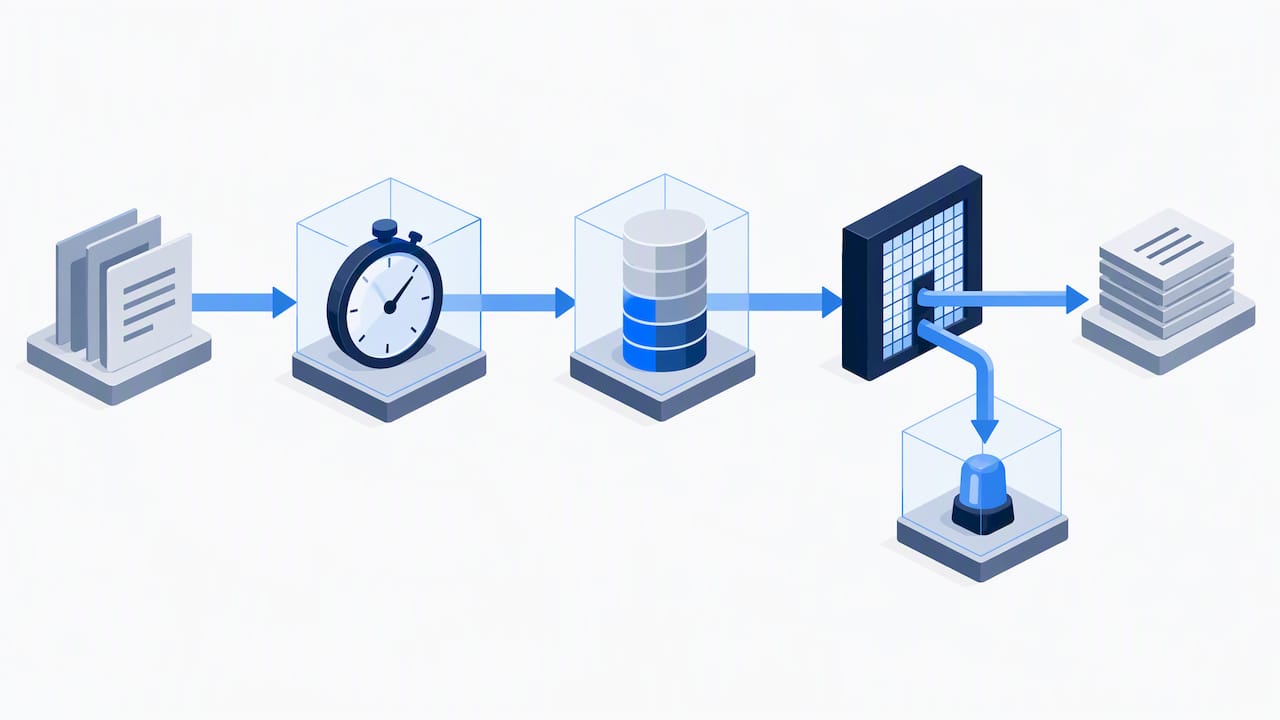
Per-document privacy filters are the backbone of multi-query accounting. Each time a document is retrieved, it consumes a slice of that document’s privacy budget, tracked under a Rényi or epsilon-based accounting scheme. The MuRAG family of algorithms demonstrates this directly: by adapting thresholds per document rather than applying a single global noise level, they can answer hundreds of queries while keeping the cumulative epsilon around 10, a workable target for many enterprise contexts, though regulated sectors may demand tighter budgets.
Teams evaluating a private RAG build should track a consistent set of metrics rather than relying on a single pass/fail test:
| Metric | What it measures | Why it matters |
|---|---|---|
| Structural leak rate | Share of queries returning unauthorized context before any filtering | Naive pipelines showed rates near 86.1% |
| Answer leak rate | Share of final answers containing unauthorized content | Confirms whether downstream filtering actually works |
| Entitlement violations | Count of retrievals that crossed a defined access boundary | Direct signal for audit and compliance reporting |
| Latency overhead | Added response time from private retrieval methods | Determines whether a method fits production SLAs |
Practical experiments should include canary probes (planted documents that should never surface to a given role), negation and exploit framings designed to trigger DACSI-style impersonation, and multi-role coverage tests that run the same query as different authorized and unauthorized identities. When tuning shortlist size or epsilon targets, treat cryptographic methods as necessary, regardless of their latency cost, whenever regulatory exposure or contractual liability makes a single leak unacceptable.
Forge Operational Roadmap for Enterprise Private RAG
Moving from research-grade guarantees to a production system takes a structured rollout. We organize enterprise private RAG engagements into three phases, detailed in our three-phase RAG security roadmap:
- Phase 1, assessment and pilot: we classify existing data, run threat modeling specific to the client’s retrieval architecture, and measure baseline leakage before any hardening begins.
- Phase 2, hardened deployment: we integrate Authorization-First Retrieval or hybrid private retrieval patterns, roll out webAI Personas on-premises or air-gapped, and implement policy-as-code with full auditability.
- Phase 3, operations and assurance: we run continuous evaluation, maintain privacy budget accounting, and keep an incident response process tuned specifically for retrieval-boundary failures.
Across all three phases, we deliver secure local and air-gapped deployment, custom model integration, private AI assistant rollout, and sovereign MLOps and runtime orchestration, all built on extensive experience in high-consequence, regulated environments where data never leaves the client’s own perimeter.
When to Pick Architectural Guarantees Over Post-Hoc Controls
If you operate in a regulated or high-consequence environment, favor Authorization-First Retrieval, private information retrieval, or cryptographic shortlists over relying on differential privacy or filtering alone. Lower-stakes use cases can often run safely on layered DP plus runtime controls. Weigh your engineering maturity and latency tolerance honestly, then plan a phased path that adds stronger guarantees as your audit and regulatory obligations grow.
— John Ezzell, Founder
How Forge AI Deployment Helps You Implement Private RAG
Enterprises in finance, defense, logistics, energy, and manufacturing come to us because sensitive data can’t leave their own infrastructure, and we build private RAG systems that honor that constraint from the ground up. We deploy locally and air-gapped, integrate local AI Personas tuned to your domain, and connect your retrieval pipeline to an Intelligence Delivery Network designed for enterprise use, providing frontline teams fast, source-backed answers from large technical document libraries, fully offline on a single device.
A typical engagement moves through assessment, hardened deployment, and ongoing operations, the same three phases outlined above, so your team always knows what’s next and what we’re measuring.
- We classify your data and threat-model your retrieval architecture before writing a line of integration code.
- We deploy Authorization-First Retrieval or hybrid private retrieval patterns matched to your risk tolerance.
- We keep operating the system afterward, tuning privacy budgets and auditability as your requirements evolve.
Visit our solutions page to see the full scope of deployment and integration services, or explore the webAI platform we deploy and operate inside your environment.
FAQ
Are Rags Still Relevant for Enterprise AI Data Handling?
The term “rag” in this context refers to retrieval-augmented generation, not cleaning cloth, and it remains one of the most widely used patterns for giving language models access to private enterprise data without retraining the model itself. It stays relevant specifically because it lets organizations keep sensitive documents in their own infrastructure while still letting a model reference them at query time.
Does an LLM Store the Data You Send It During Retrieval?
Whether a language model stores your data depends entirely on the deployment: a private, on-premises or air-gapped deployment keeps retrieved content and queries inside your own infrastructure rather than sending them to an external provider. Cloud-hosted models may log or retain queries depending on the provider’s own policy, which is why regulated organizations typically require architectural guarantees like Authorization-First Retrieval rather than relying on a vendor’s data handling promises alone.
What Is a Self-RAG Approach, and How Does It Differ From Private RAG?
Self-RAG refers to a model architecture where the system learns to decide when to retrieve, what to retrieve, and how to critique its own retrieved content during generation, a design focused on answer quality rather than confidentiality. Private RAG is a separate concern: it adds authorization, privacy accounting, or cryptographic protections to the retrieval pipeline regardless of whether the underlying model uses a self-RAG style of reasoning.
What Does RAG Mean in an Art or Creative Context?
Outside of AI engineering, “RAG” is not a standard term in visual art; it most commonly refers to literal rags or fabric used in textile and mixed-media work, which is unrelated to retrieval-augmented generation. In enterprise AI and data privacy discussions, RAG refers exclusively to the retrieval-augmented generation pattern covered throughout this guide.
Which Private RAG Method Should a Regulated Enterprise Start With?
Most regulated enterprises should start with Authorization-First Retrieval because it eliminates structural leaks by construction rather than relying on probabilistic defenses, and research shows naive retrieve-then-filter pipelines leak unauthorized context in roughly 86.1% of queries. Teams with high query volumes per user or corpora that must stay hidden from the retrieval service itself often layer in differential privacy accounting or hybrid private information retrieval on top of that baseline.
Sources
- PILLAR: Private Inverted‑index Lexical Lookup for Augmented Retrieval
- Pointing the way, hiding the destination: Practical private dense retrieval at scale
- Document‑Authored Control‑Signal Impersonation: A Low‑Cost Indirect Prompt Attack on RAG Safety Boundaries
Authoritative Readings for Private RAG Architecture
These papers and engineering references cover the core guarantees and attack patterns discussed throughout this guide.
- PILLAR: Private Inverted-index Lexical Lookup for Augmented Retrieval, covering hybrid PIR-friendly retrieval protocols.
- Pointing the way, hiding the destination: Practical private dense retrieval at scale, on metric-DP shortlists combined with lightweight cryptography.
- Document-Authored Control-Signal Impersonation, documenting a low-cost indirect prompt attack specific to RAG systems.
- Private-RAG: Multi-query differentially private RAG algorithms, detailing per-document privacy filters for multi-query workloads.
For more on access control fundamentals relevant to retrieval-boundary enforcement, see this partner overview of access controls.